Argelita is a small town of Islamic origin in the interior of the province of Castellón, set in a valley ringed by rugged mountains and overlooking the Villahermosa river.
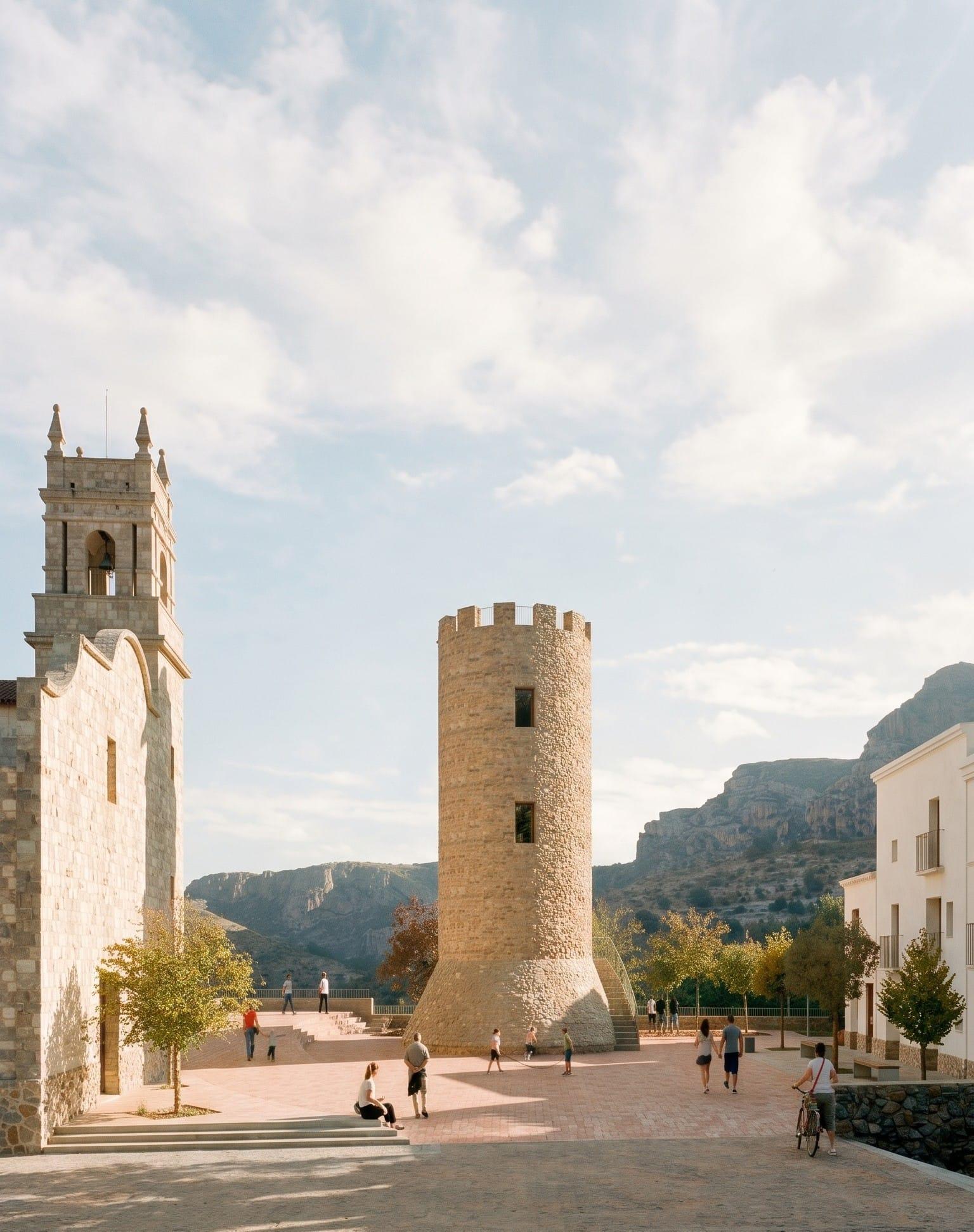
The Plaza de la Iglesia, at the northern edge of the old town, is the point from which the village grew. It is therefore home to its oldest buildings: the Torre Redonda (Round Tower) and the Torre Cuadrada (Square Tower), both of Islamic origin, and the parish church, built later.
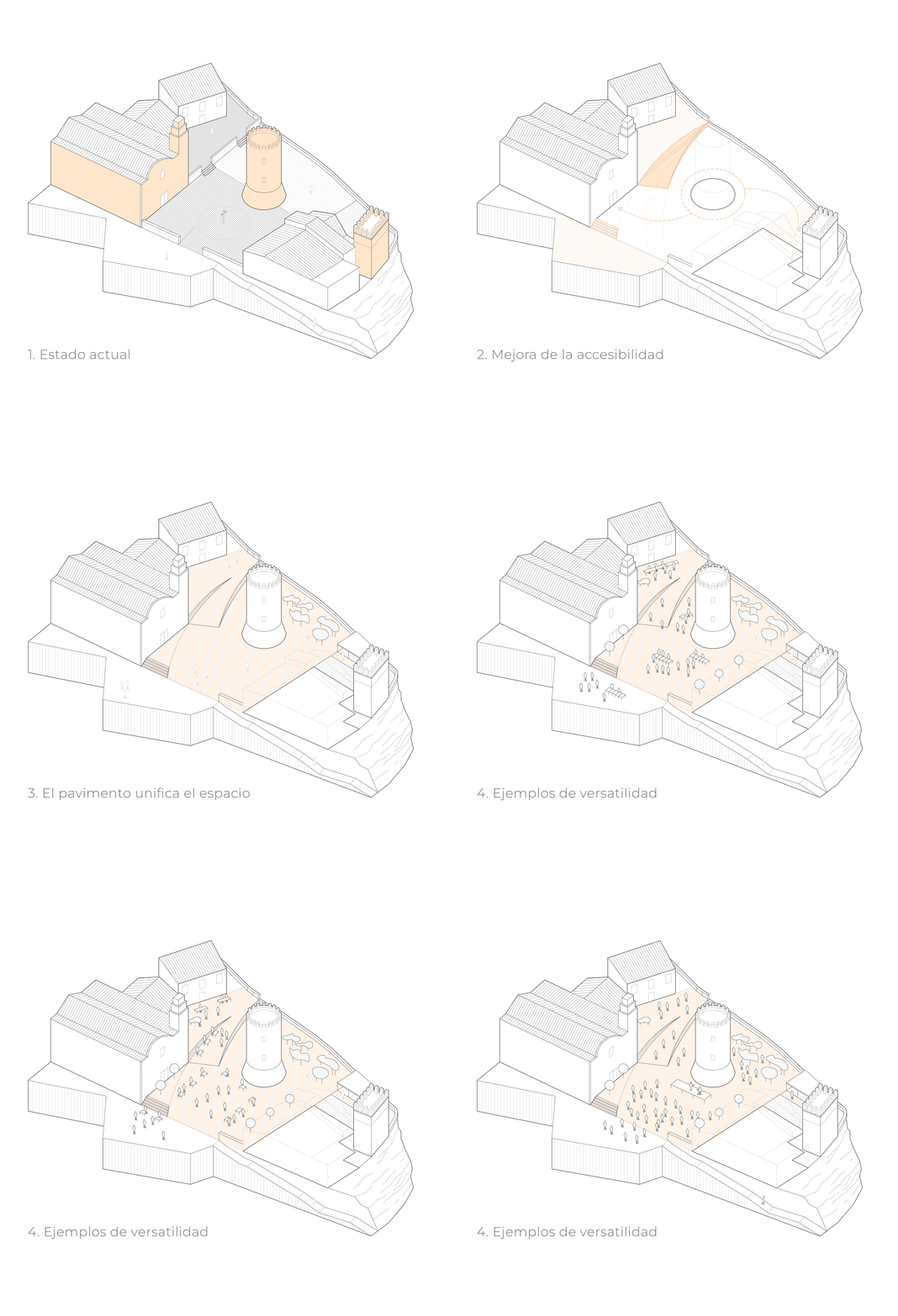
Today the square is in an evident state of decline: it has no clear use, it is cut off from the village, its two levels are not accessible from one another, and the mix of paving materials prevents it from being read as a single space.
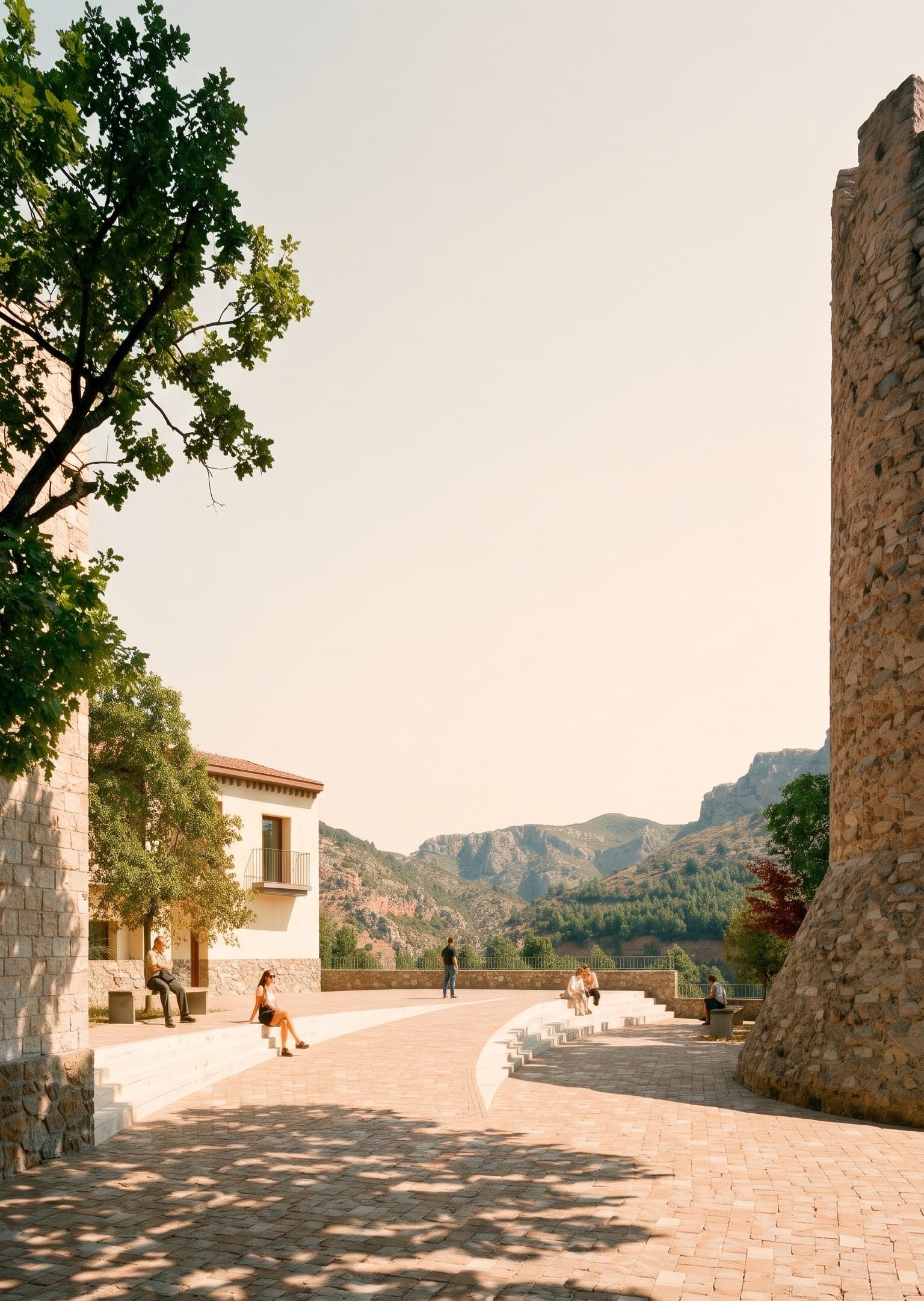
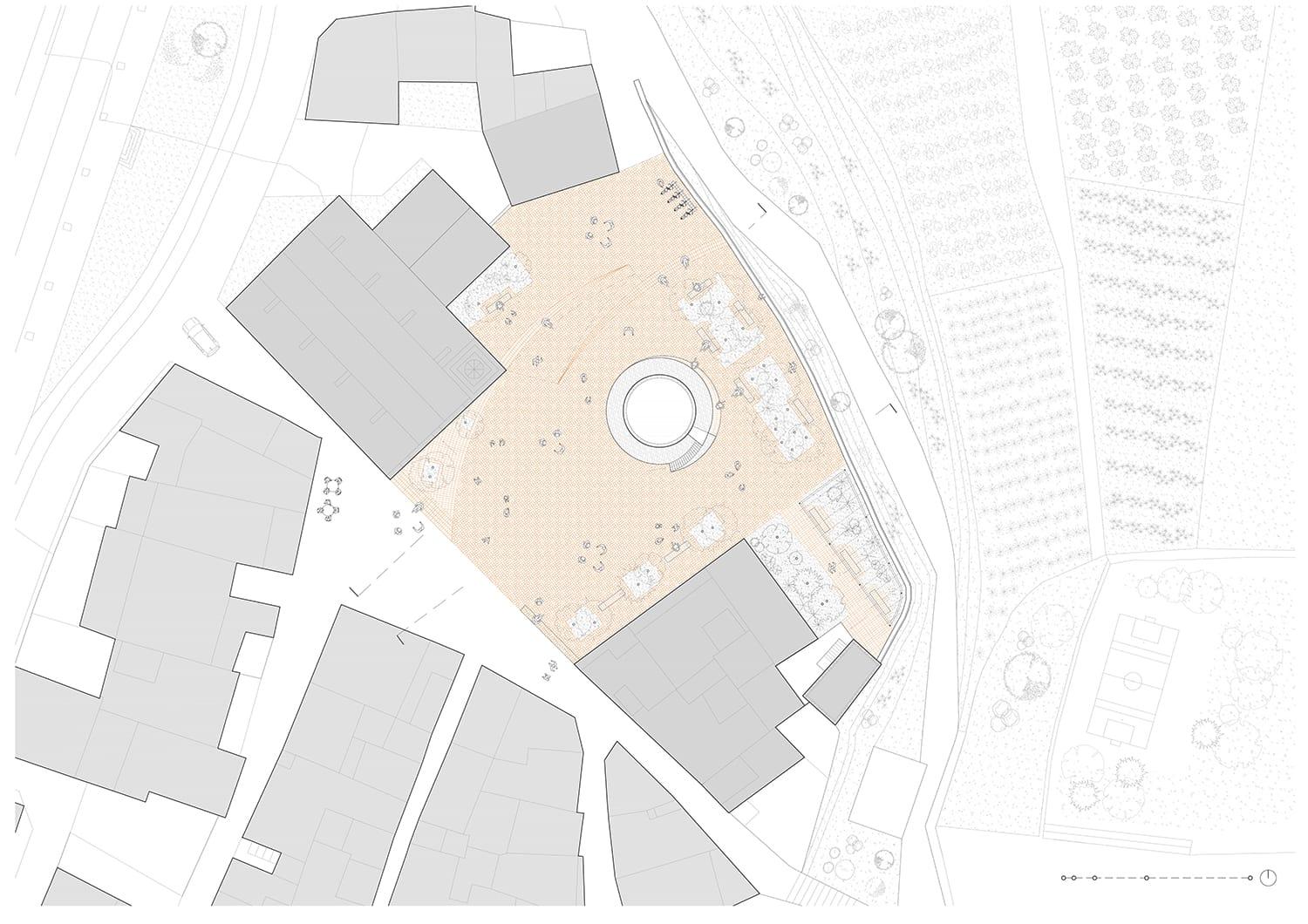
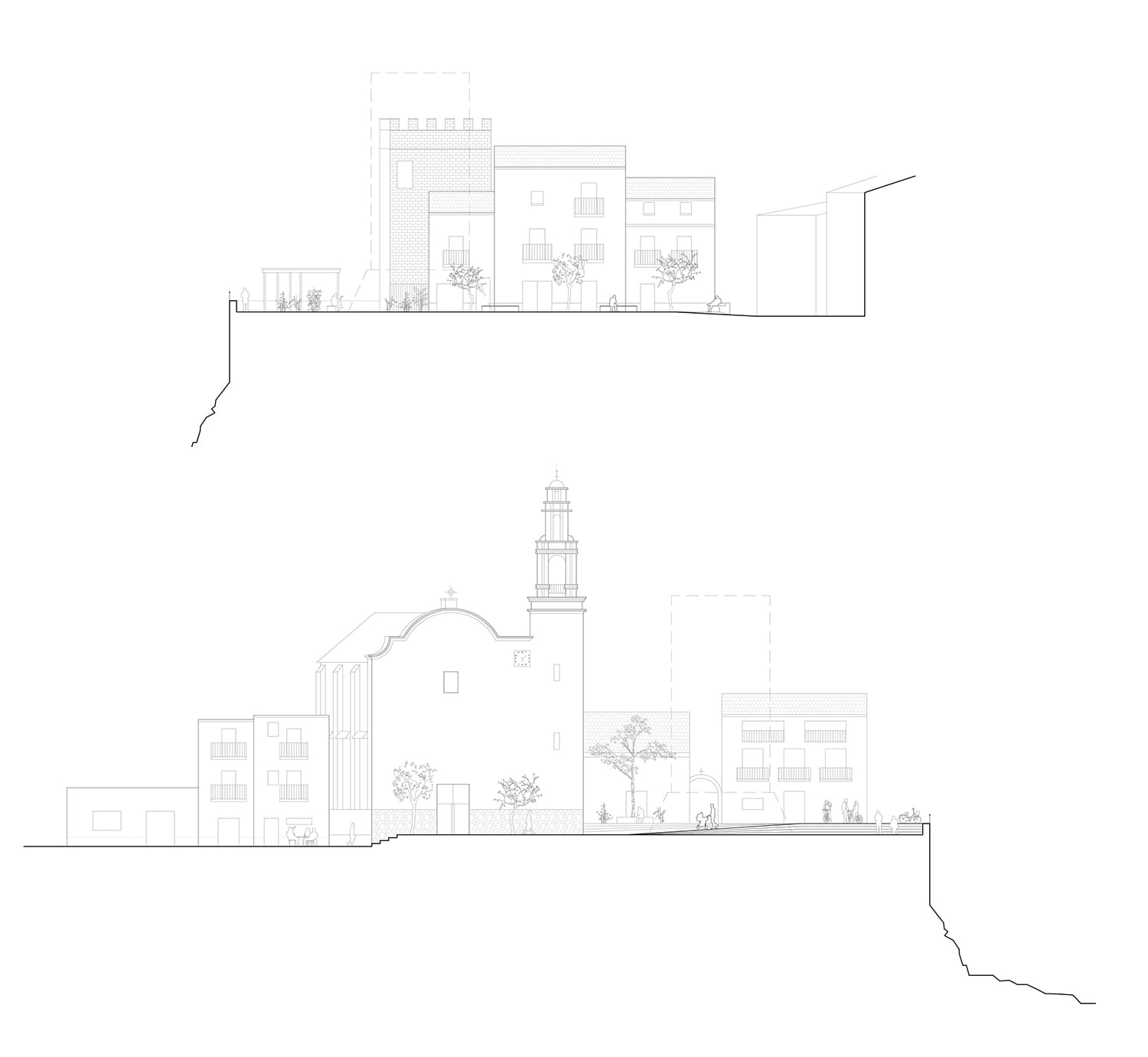
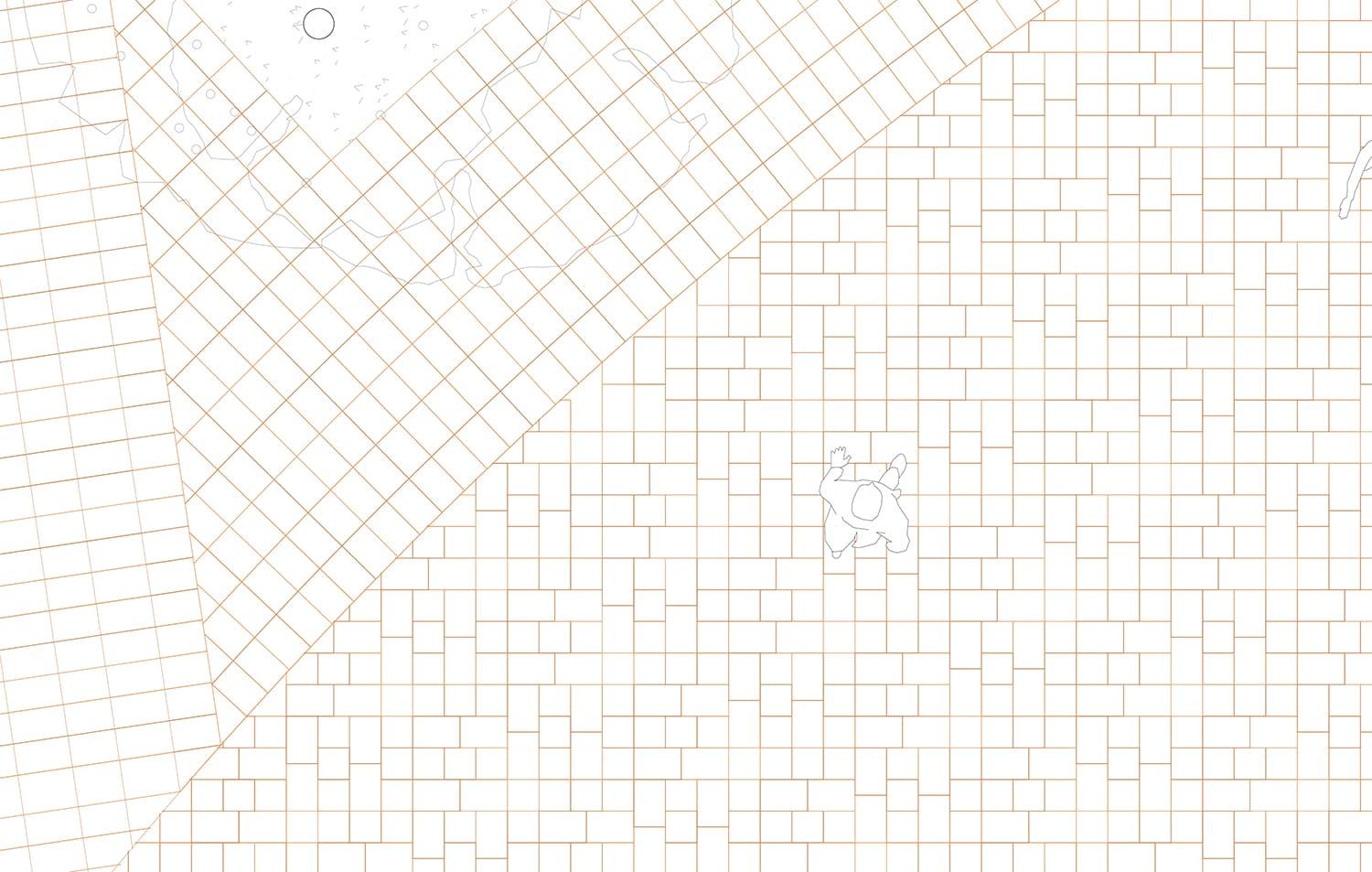
The proposal removes the low walls that enclose the central area and resolves the change in level with an inclined plane that joins the two heights, strengthening the connection with the village. A continuous pavement runs across the whole site, including the approach to the Torre Cuadrada, and restores unity to the ensemble.
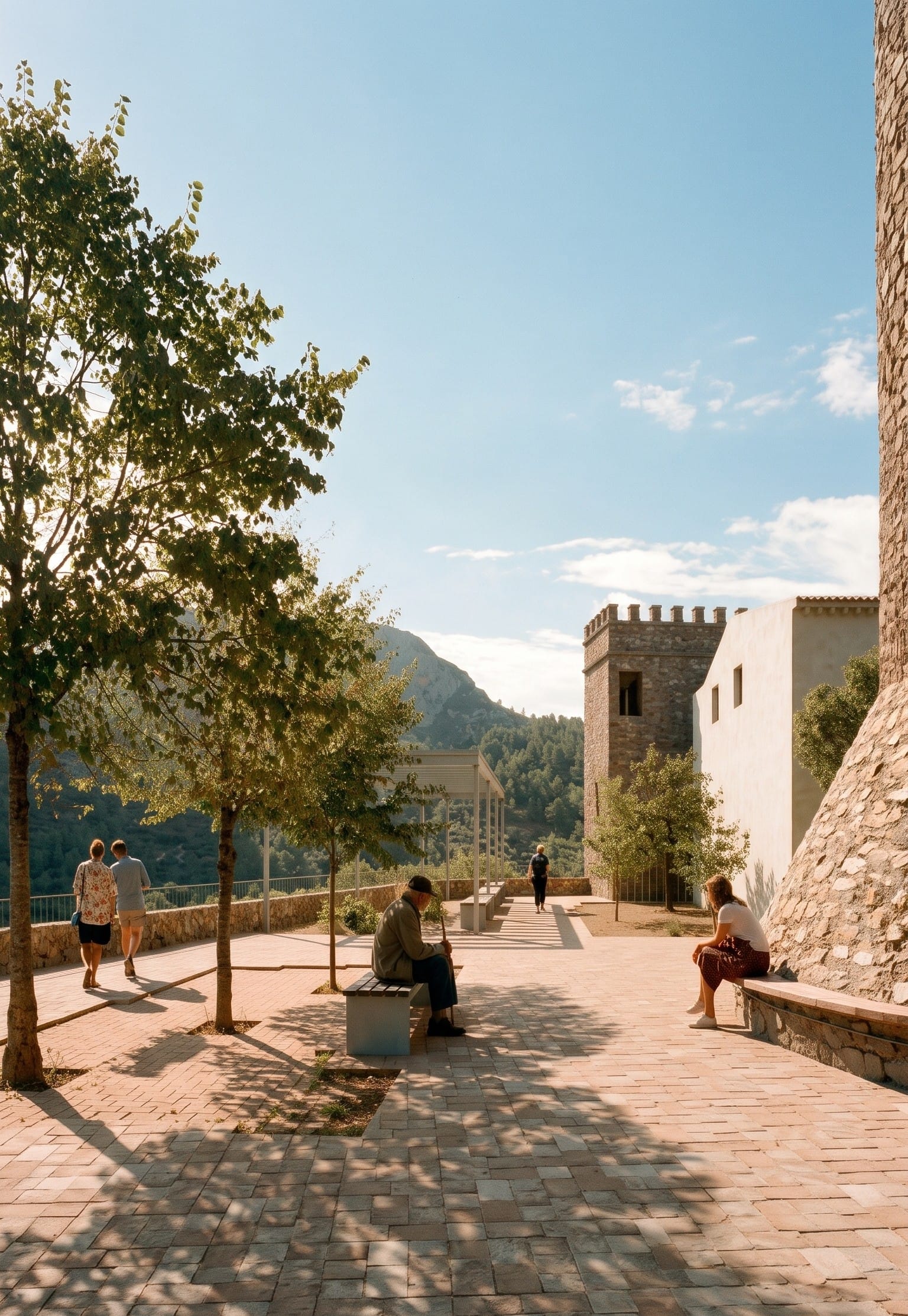
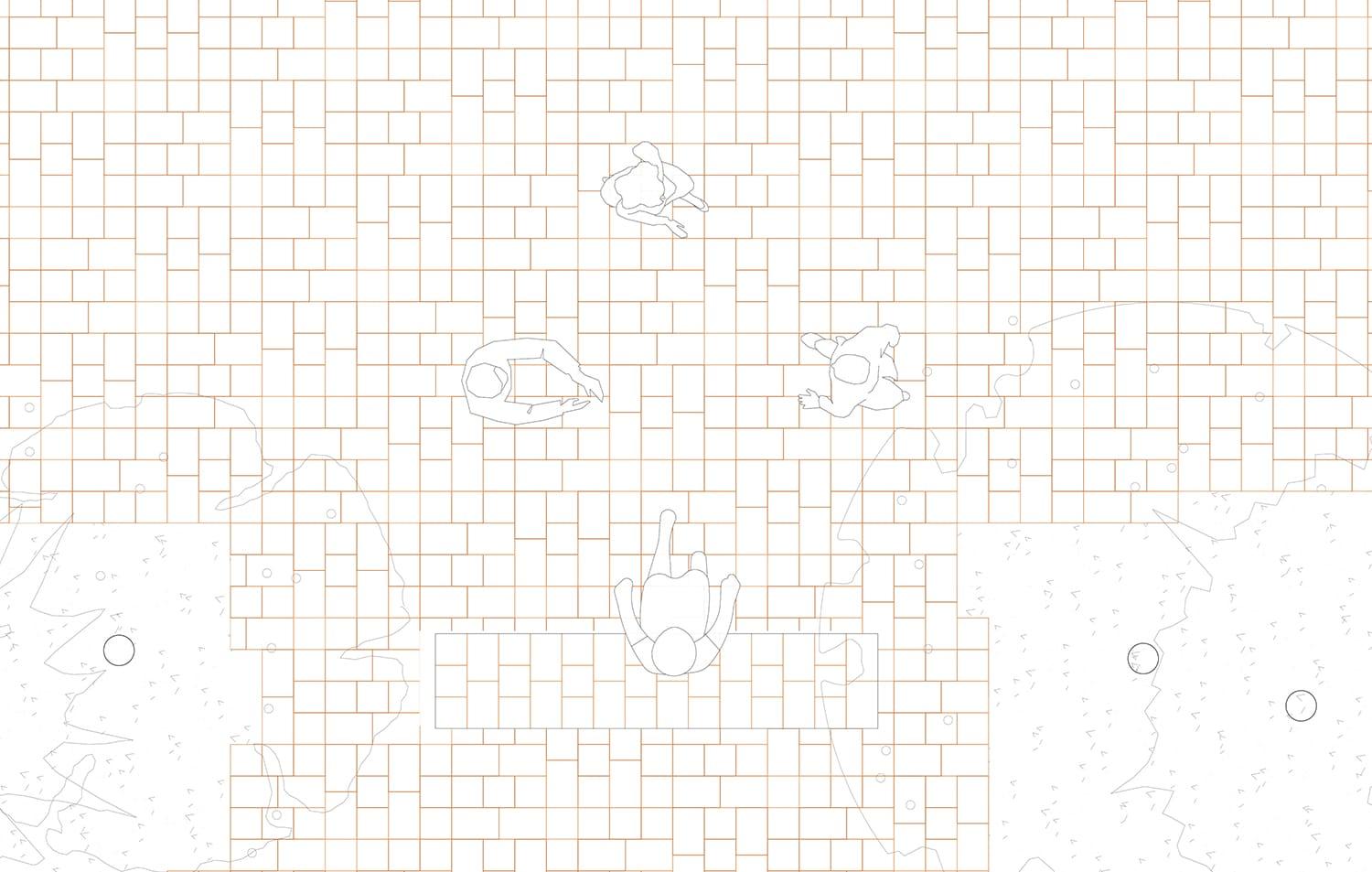
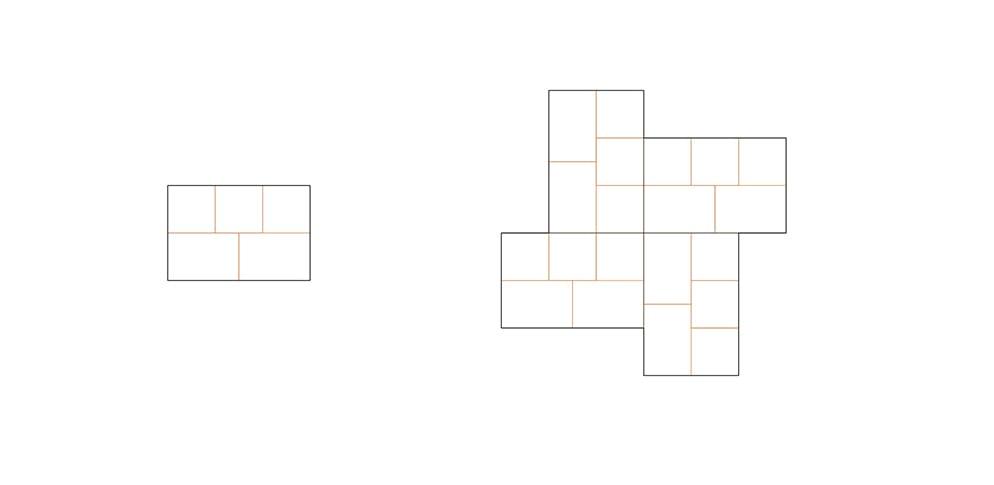
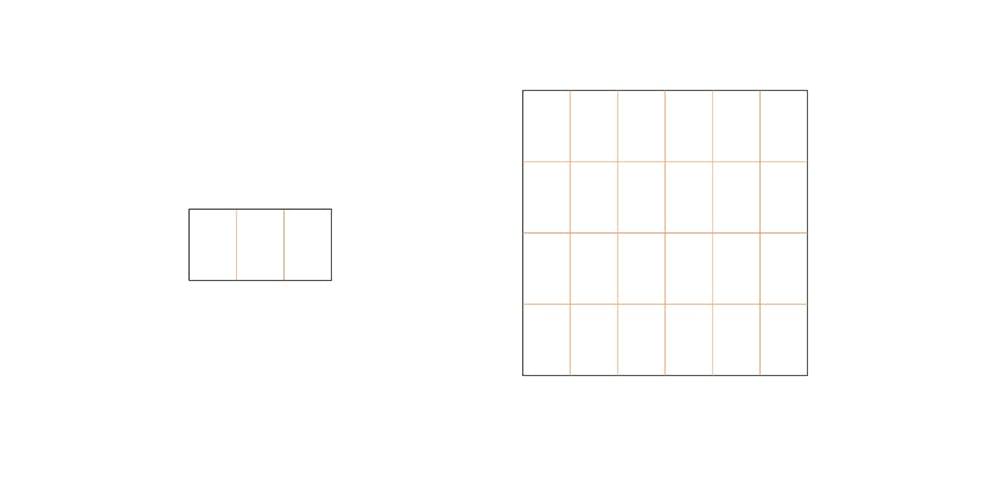
The Islamic origin of the towers determines the choice of material and laying pattern. A small-format ceramic paver was chosen, in 20 × 20 cm and 30 × 20 cm pieces, whose tone and texture blend into the existing architecture. Combining the two sizes makes it possible to compose a mosaic of Arab inspiration: a five-piece pattern that repeats and rotates to form the great ceramic carpet that covers the square.
The result is a space that brings out what the square already had: its sensory quality and the views of the river and the surrounding mountains.
Argelita es un pequeño municipio de origen islámico del interior de la provincia de Castellón, situado en un valle rodeado de abruptas montañas y asomado al río Villahermosa.
La Plaza de la Iglesia, al norte del casco urbano, es el punto a partir del cual nació el pueblo. Por eso reúne sus edificaciones más antiguas: la Torre Redonda y la Torre Cuadrada, de origen islámico, y la iglesia parroquial, construida posteriormente.
Hoy la plaza presenta un estado de degradación evidente: carece de un uso claro, está desconectada del pueblo, sus dos niveles no son accesibles entre sí y la mezcla de pavimentos impide percibirla como un único espacio.
La propuesta elimina los muretes que delimitan la parte central y resuelve el desnivel con un plano inclinado que une las dos cotas reforzando la conexión con el pueblo. Un pavimento continuo recorre todo el ámbito, incluido el acceso a la Torre Cuadrada, y devuelve la unidad al conjunto.
El origen islámico de las torres determina la elección del material y del aparejo. Se elige un pavimento cerámico de pequeño formato, en piezas de 20 × 20 cm y 30 × 20 cm, que por tonalidad y textura se integra en la arquitectura existente. La combinación de ambos tamaños permite componer un mosaico de inspiración árabe: un patrón de cinco piezas que se repite y rota hasta formar la gran alfombra cerámica que cubre la plaza.
El resultado es un espacio que pone en valor lo que la plaza ya tenía: su calidad sensorial y las vistas al río y a las montañas que la rodean.
Argelita ist eine kleine Gemeinde islamischen Ursprungs im Landesinneren der Provinz Castellón. Sie liegt in einem von schroffen Bergen umgebenen Tal mit Blick auf den Fluss Villahermosa.
Die Plaza de la Iglesia im Norden des Ortskerns ist der Punkt, von dem aus das Dorf entstand. Hier stehen deshalb seine ältesten Bauten: die Torre Redonda (Rundturm) und die Torre Cuadrada (Viereckturm), beide islamischen Ursprungs, sowie die später errichtete Pfarrkirche.
Heute befindet sich der Platz in einem sichtlich verwahrlosten Zustand: Er hat keine klare Nutzung, ist vom Dorf abgeschnitten, seine beiden Ebenen sind nicht barrierefrei miteinander verbunden, und die Vielzahl unterschiedlicher Beläge verhindert, dass er als ein zusammenhängender Raum wahrgenommen wird.
Der Entwurf entfernt die niedrigen Mauern, die den zentralen Bereich begrenzen, und überwindet den Höhenunterschied mit einer geneigten Fläche, die beide Niveaus verbindet und die Anbindung an das Dorf stärkt. Ein durchgehender Belag zieht sich über das gesamte Planungsgebiet, einschließlich des Zugangs zur Torre Cuadrada, und gibt dem Ensemble seine Einheit zurück.
Der islamische Ursprung der Türme bestimmt die Wahl des Materials und des Verlegemusters. Gewählt wurde ein kleinformatiger Keramikbelag in den Formaten 20 × 20 cm und 30 × 20 cm, der sich in Farbton und Textur in die bestehende Architektur einfügt. Die Kombination beider Formate erlaubt ein arabisch inspiriertes Mosaik: ein Muster aus fünf Platten, das sich wiederholt und dreht, bis es den großen Keramikteppich bildet, der den Platz bedeckt.
Das Ergebnis ist ein Raum, der zur Geltung bringt, was der Platz bereits besaß: seine sinnliche Qualität und den Blick auf den Fluss und die umliegenden Berge.